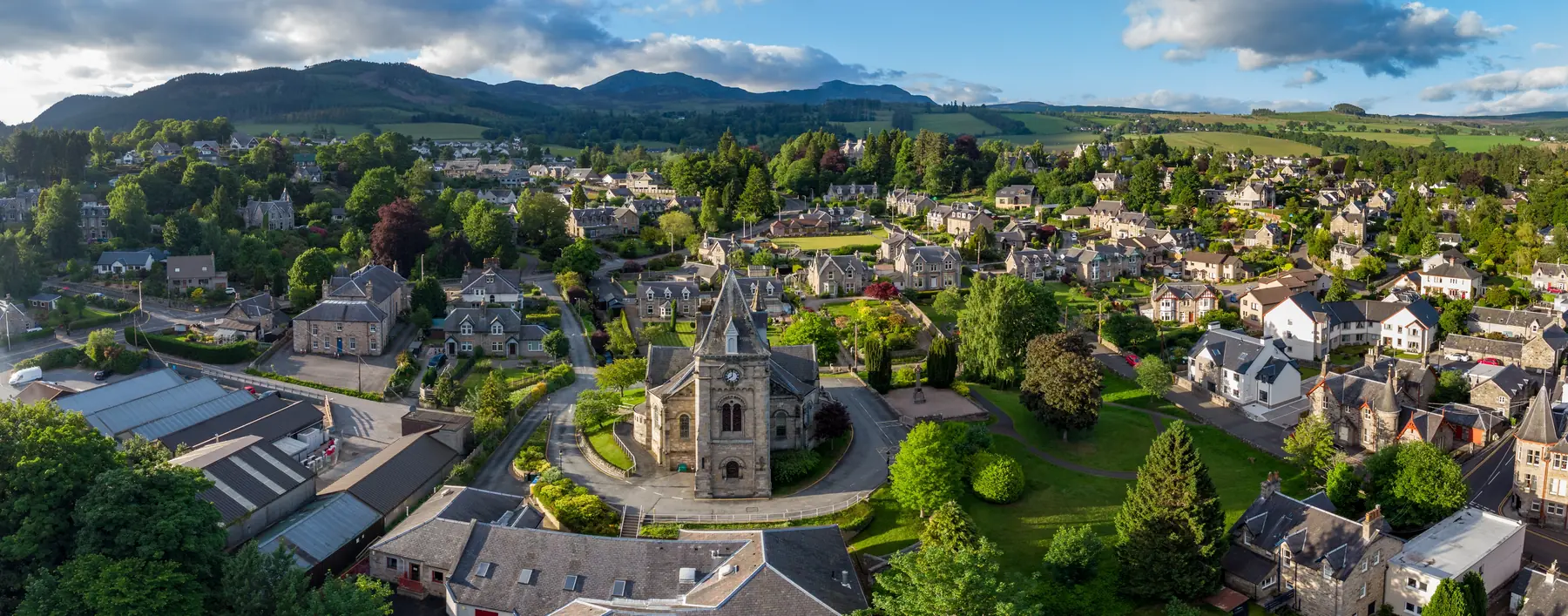
Pitlochry is an inexpensive place to spend a week. The distilleries, the castle and the theatre all charge, but they are the extras: the loch, the forests, the waterfalls, the gorges, a Pictish stone and one of the more unusual free attractions in Scotland are all available for nothing.
Scotland’s access legislation also means the hills and woods around the town are open to walk on, which is the single biggest free asset here.
Free, eight hundred metres from the high street, and genuinely unusual. Thirty-four linked pools carry salmon past the hydro dam to spawn upstream, with an underwater viewing chamber and a counter recording the run. Twenty minutes, no charge, and one of the few places in Britain where you can watch migrating salmon at close range.
The loch behind the town was created by the dam in the 1950s and the circuit round it is about eight kilometres of level path through woodland, crossing the river twice. Free, shaded and beautiful, and it starts from the middle of the town. Boat hire on the loch is not free; walking round it is.
On the northern shore, and famous for autumn colour. Waymarked trails, free parking at the forest car park, and — in October — the setting for the ticketed Enchanted Forest show, which is worth knowing about even if you are not going, since the wood itself is at its best that month.
A sixty-metre waterfall in a wooded gorge two kilometres from the town, reached by a woodland path with a viewing platform at the end. Free, under an hour, and largely ignored by visitors.
Two kilometres south, an eighth or ninth-century Pictish cross-slab standing in a field under a shelter, carved on both faces with a cross, horsemen and beasts. Free and open at all times.
The Victorian high street survives largely intact because the A9 was diverted around the town in 1981 and later development passed it by. The town clock, the Recreation Ground, and the Explorers Garden’s woodland paths cost nothing to walk.
Moulin, the older village just north of the town, has a church, a ruined castle and the start of the Ben Vrackie path.
Ben Vrackie, 841 metres, is free to climb from Moulin — four to five hours round trip for the best view in the area.
Craigower, National Trust for Scotland, is a smaller wooded hill with a viewpoint over the Tummel valley.
Tay Forest Park, a network of Forestry and Land Scotland woods across highland Perthshire, has free waymarked trails at Allean, Craigvinean and elsewhere. Some car parks charge.
Killiecrankie, five kilometres north — the wooded gorge where the Garry runs through a rock channel, the site of the 1689 battle, and Soldier’s Leap, the point where a government soldier is said to have jumped the river. The National Trust for Scotland car park charges; the paths do not.
The Linn of Tummel, three and a half kilometres north-west, where the Tummel and the Garry meet in rapids and pools among old woodland. National Trust for Scotland, free access.
The Falls of Bruar, fifteen kilometres north, with paths and bridges climbing beside a series of falls. Free to walk, with parking at the shopping complex at the bottom. The woodland around them exists because Robert Burns wrote a poem in the voice of the river asking the Duke of Atholl to plant trees, and the Duke obliged.
The Hermitage at Dunkeld — Ossian’s Hall standing over the Black Linn waterfall among some of the tallest trees in Britain. National Trust for Scotland; the car park charges, the walk does not.
Clachan an Diridh, a small stone circle on the hill west of the town.
The Pitlochry Standing Stone in Craiglunie Gardens.
Claverhouse’s Stone, marking where the Jacobite commander fell at Killiecrankie.
The Black Castle ruins, a scant fragment near Moulin.
Salmon at the fish ladder from late spring through autumn.
Red squirrels in Faskally and the Perthshire woods — highland Perthshire is one of their strongholds.
Red deer on the hills, especially in winter when they come down.
Ospreys on the lochs in summer, and red kites and buzzards over the valley.
Parking, mostly, and even that is modest here. There is free parking around the town, and the National Trust for Scotland car parks at Killiecrankie, the Linn of Tummel and the Hermitage are free to members — an NTS membership pays back quickly in this part of Scotland.
Trains run from a station in the middle of the village to Perth, Edinburgh, Glasgow and Inverness, and buses run north to Blair Atholl and south to Dunkeld, which makes a car-free stay entirely practical.
Start at the fish ladder, then walk the Loch Faskally circuit in the morning — three hours with stops, entirely level, and through the best woodland in the area. In the afternoon, take the bus or drive north to Killiecrankie, walk down into the gorge to Soldier’s Leap, and follow the river south to the Linn of Tummel and back into Pitlochry. Finish at the Black Spout if the legs allow.
That is a full day of Highland Perthshire — a loch, a gorge, a battlefield and two waterfalls — for nothing.
Pitlochry’s calendar carries more free content than a village this size should. Highland games at Pitlochry, Blair Atholl and Kenmore run through the summer — the games themselves are ticketed but the atmosphere in the towns is not, and the Atholl Highlanders’ parade at Blair Castle is a genuine curiosity. Pipe bands play in the town through the season.
The Victorian centre itself is worth an hour: the town grew as a resort after the railway arrived in 1863, and because later development largely passed it by — helped by the A9 being diverted onto a bypass in 1981 — the high street survives more or less intact. The town clock, the villas along Atholl Road and the Atholl Palace looming above the town are all free to look at.
Scotland’s access legislation gives a right of responsible access over almost all land and inland water. Around Pitlochry that means Ben Vrackie, Craigower, the forests, the loch shores and the hill ground are all open to walk on, without gates, fees or permission, provided you behave responsibly.
It is the reason a week here can cost very little, and it is worth understanding if you are visiting from England, where the arrangements are considerably more restricted.
The first free day covered the loch and Killiecrankie. The second should go west. Take the road or the bus along Loch Tummel to Queen’s View, walk the forest trails at Allean above the loch, and continue to Kinloch Rannoch and along Loch Rannoch if you have a car. There are free waymarked walks all the way along, and the road ends at Rannoch Station on the edge of the moor — a dead end, a railway halt and one of the emptiest places you can drive to in Britain.
Everything on that day except the parking is free, and the scenery is the equal of anywhere in the Highlands.
Yes, including the underwater viewing chamber.
Yes, and the circuit is about eight kilometres of level path starting from the town.
Yes. The paths are free; parking is at the shopping complex below.
The paths and the gorge are; the National Trust for Scotland car park charges, and is free to members.
The fish ladder for novelty; the Loch Faskally circuit for a half day; Killiecrankie for the gorge and the history.