
Pitlochry: Attractions, Days Out and Places to Stay
The Hermitage (National Trust for Scotland), Blair Castle & Gardens and more: the attractions, the days out and how to plan your visit.
The Hermitage (National Trust for Scotland), Blair Castle & Gardens and more: the attractions, the days out and how to plan your visit.
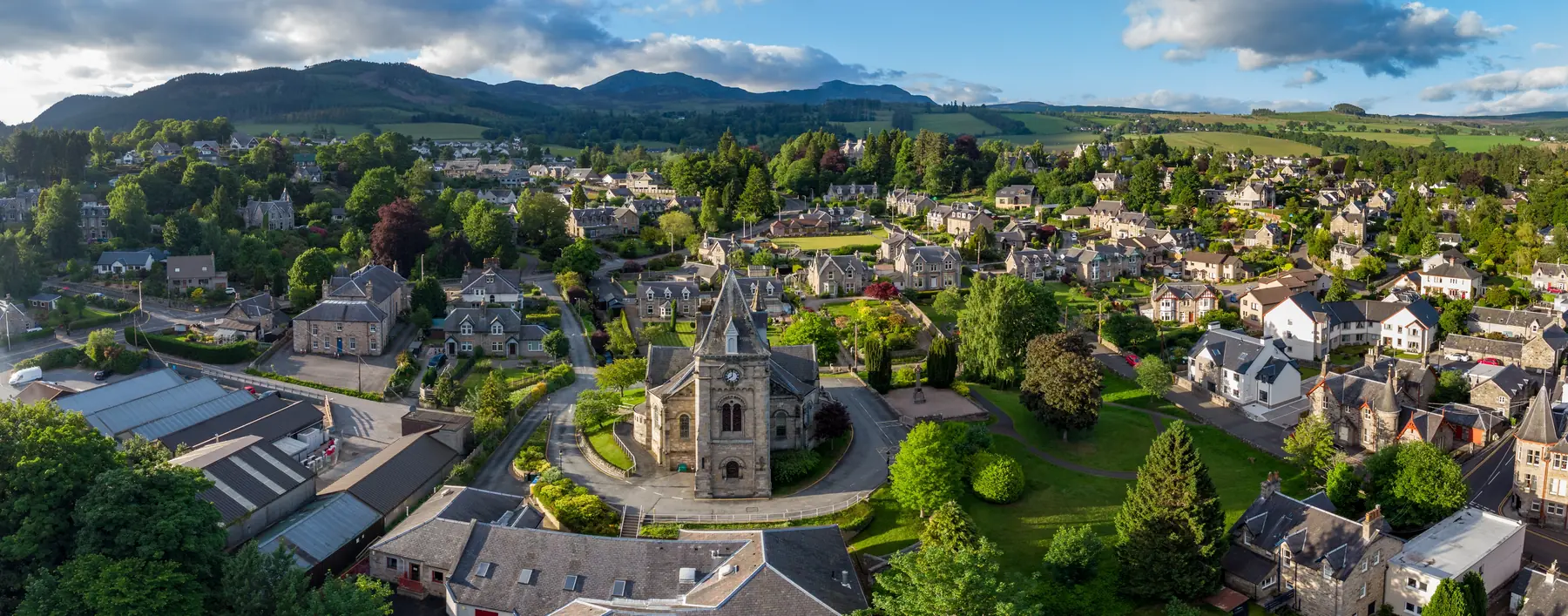
Pitlochry is a historic market town on the River Tummel in Perth and Kinross, historically in the county of Perthshire, with a population of 2,694 in 2022. It became a resort in the Victorian era and largely stayed one: the railway arrived in 1863, later development passed the town by, and the A9 was diverted onto a bypass in 1981, leaving the Victorian centre intact. The town is compact — the station is 0.3 km from the centre, and the dam, the fish ladder, the theatre and the footbridge between them all sit within about a kilometre of it in a straight line. The catch: the two most-reviewed sights filed under Pitlochry are not in Pitlochry, but at Blair Atholl and Dunkeld, 9.6 km and 18.0 km away.
Nearly everything hangs off one street. Atholl Road carries the shops, cafés, hotels and the VisitScotland iCentre at number 22, running from the Perth Road end, where Blair Athol Distillery stands, out to the north-west. The station sits just off it, managed by ScotRail, with a ticket office but no machines, a waiting room and ramp access to the only platform in routine use. The main bus stop is by Fishers Hotel, 0.2 km from the centre.
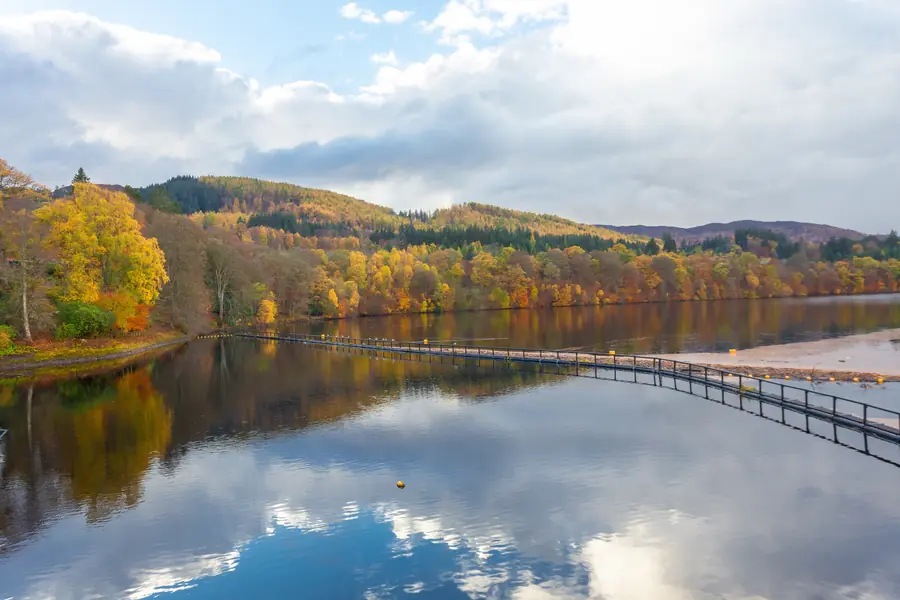
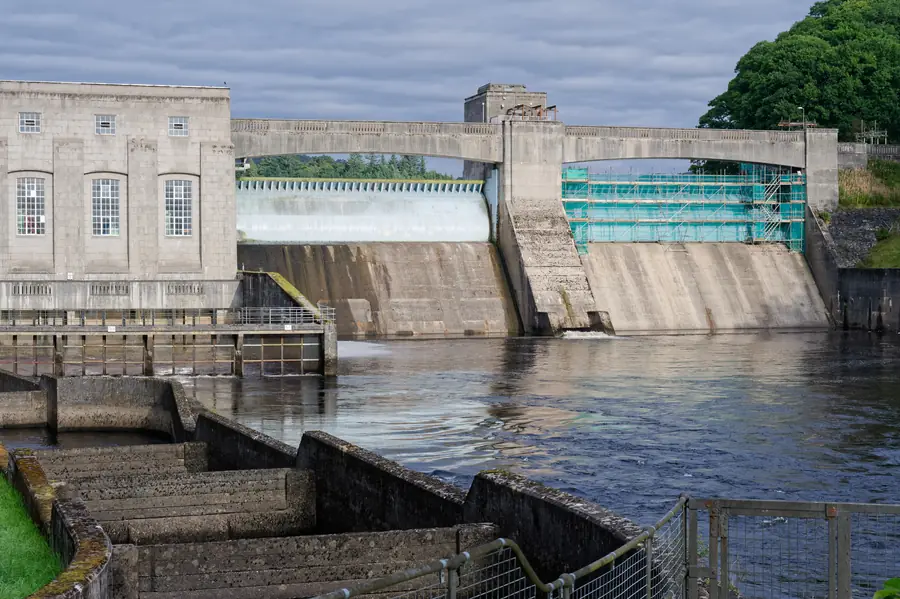
South-west, Armoury Road ends at Pitlochry Dam, completed in 1951, which blocked the Tummel to create the three-mile Loch Faskally and generates hydro-electric power for the National Grid. The fish ladder beside it carries salmon upstream past the dam, and is the town’s most divisive sight, at 4.2 from 515 Google reviews. The observation tank has been closed since July 2019 over access and safety concerns, with live underwater feeds at the visitor centre instead. A visitor in June 2026 wrote, “Really interesting but don’t expect to see too many fish as the water is murky and turbulent.”
Across the water at Port na Craig, reached by the suspension bridge, is Pitlochry Festival Theatre, which programmes year round; the festival has been held since 1951, for its first thirty years in a marquee, with the summer programme running June to September. The Explorers Garden climbs the hillside beside it, at 4.2 from 82 Google reviews, and its visitors are candid. One in May 2026 wrote, “Maintained by volunteers and a bit unkempt/in need of weeding in places, but none the less interesting and well worth a visit.”
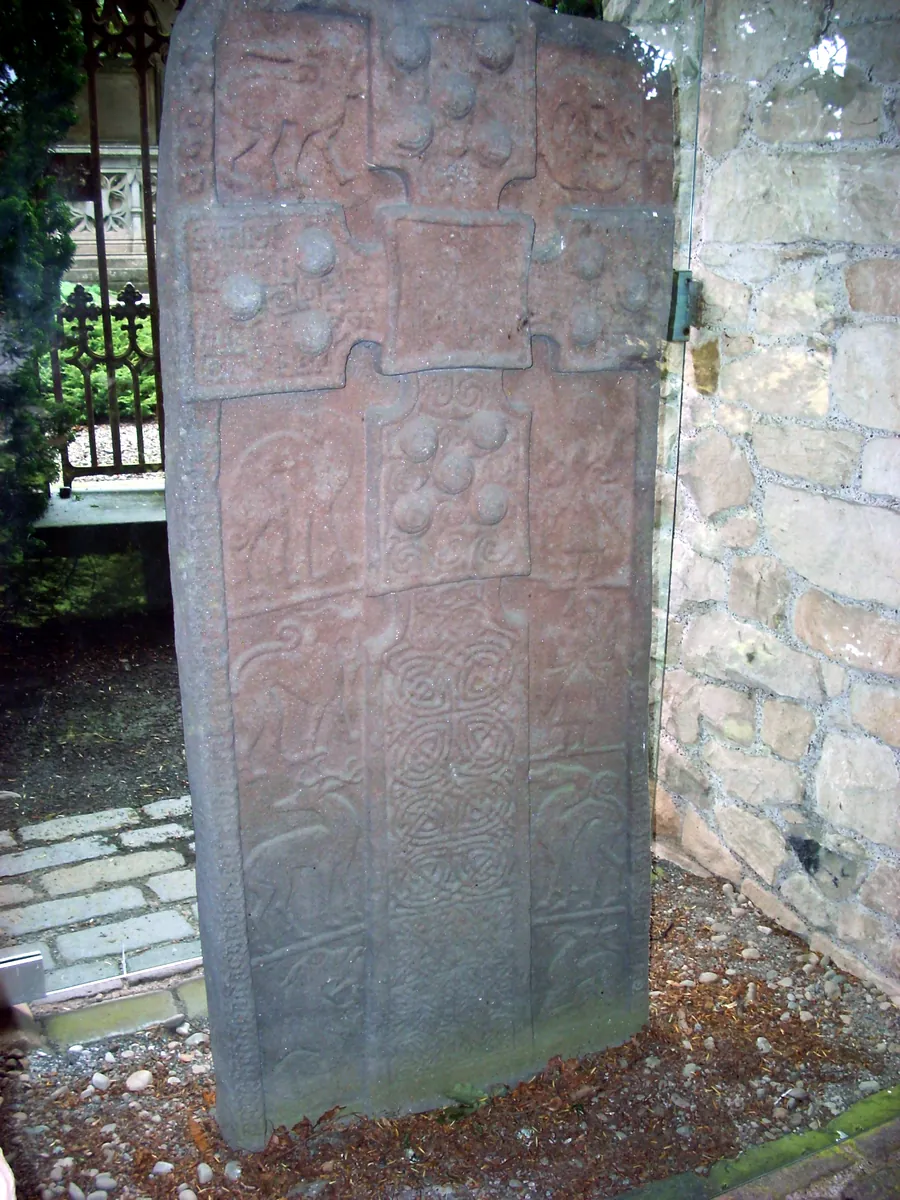
Just north is Moulin, where the kirk of 1873 now holds a local history museum. Two walking targets sit close in, both straight-line from the centre: the Black Spout waterfall, 1.5 km east, and the Dunfallandy Stone, a Pictish carved slab kept under glass, 1.9 km south. A visitor in June 2026 described the approach: “It’s only around 20 minutes walk from the centre of Pitlochry along a quiet country road, then up a farm track and up a few steps at the end.” Faskally Forest, with Loch Dunmore in it, begins about 2.1 km north-west.
Crowding is not the pressure here. Across 156 visitor reviews of sixteen attractions and operators in and around the town, ten mention crowds, queues or being busy at all.
What pressure exists concentrates in autumn. The Enchanted Forest, a light show staged in Faskally Wood, holds 4.6 from 1,471 Google reviews, and every one of the ten reviews collected for it is dated October or November. Visitors park in town and are taken to the wood by event coach. A visitor in November 2025 wrote, “Parking in Pitlochry was challenging but once in queue for coach everything went smoothly.”
The rest of the seasonal news is closure rather than crush. Edradour, the distillery in the hills above the town, holds 4.3 from 372 Google reviews, but its recent ones come mostly from people who could not get in: a visitor in October 2025 wrote, “Very disappointed to read that this distillery is closed to visitors for the whole of 2025.” Blair Athol Distillery is the one whose recent reviews describe tours running, at 4.8 from 1,556. Weather and footing are the other constant: a visitor to the Linn of Tummel in May 2026 warned, “Be aware it is a rough and potentially slippery down to the rocks.”
Half a day covers the high street, the dam and the fish ladder, and a crossing of the suspension bridge to the theatre side. A day adds a forest walk — at Faskally, a visitor in July 2026 gave the two waymarked routes as three quarters of a mile, accessible, and a mile and a half that is steep in places and not suitable for wheelchair users — or the walk to the Dunfallandy Stone, a distillery tour, or the boating station on Loch Faskally, which hires boats and paddleboards.
Two nights suits it better: the town works as a base more than a destination. Blair Castle can take a whole day, and reviewers who planned on a couple of hours describe staying far longer; Killiecrankie, and Dunkeld with the Hermitage, each want half of one. Rafting and gorge walking on the Tummel, canyoning at Bruar and the bungee at Garry Bridge are booked from here. In summer, an evening at the Festival Theatre is the reason to stay the night.
Distances are straight-line from the centre. Killiecrankie is 5.2 km north, in the pass the A9 has bypassed since 1986. The Soldiers Leap, the National Trust for Scotland visitor centre and the ten-arch railway viaduct of 1863 are all close together; the Linn of Tummel, 3.5 km out and also National Trust for Scotland, is reached by steps at the side of Garry Bridge.
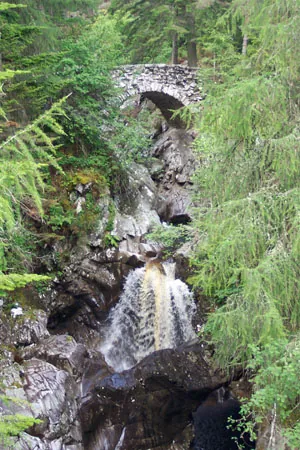
Blair Atholl is 9.6 km up the valley, with Blair Castle and its gardens at 4.7 from 3,649 Google reviews, and the adjoining village of Bridge of Tilt. Beyond it, the Falls of Bruar are the waterfalls Robert Burns addressed in verse, petitioning the Duke of Atholl to plant trees.
Grandtully is 5.7 km and Logierait 7.2 km, the latter where the Tay and the Tummel meet; both are bases for outdoor operators rather than places to linger. Dunkeld is 18.0 km down the valley, and the Hermitage in the woods beside it is the most-reviewed attraction in the area, at 4.8 from 4,225 Google reviews. Kirkmichael is 14.4 km east on the A924, Kenmore 20.7 km west at the foot of Loch Tay.
Tours, tickets and days out — 99 bookable experiences, from guided walks to full-day trips beyond Pitlochry.
The most-visited sights in and around Pitlochry.
The Falls of Bruar are a series of waterfalls on the Bruar Water in Scotland, about 8 miles from Pitlochry in the council area of Perth and Kinross.
Faskally Forest, also known as Faskally Woods, is a wooded area in the historic county of Perthshire, Scotland.
The Pitlochry fish ladder is a fish ladder next to the Pitlochry Power Station, near Pitlochry, Perth and Kinross, Scotland, which allows salmon to…

The top sights on one map — and a sensible order to see them in.
Pitlochry is on the main line from Edinburgh and Glasgow via Perth and Birnam, with trains every hour or two, which continue north to Blair Atholl, Kingussie, Aviemore and Inverness. Getting here from England usually means changing in Edinburgh, but one direct daytime train from London Kings Cross takes 6 hr 30 min via York, Newcastle and Edinburgh. Nightly except Saturday, the Highland Sleeper leaves London Euston…
Inter-city buses along the A9 mostly bypass Pitlochry. Citylink Bus M90 from Edinburgh takes 2 hours via Perth Broxden P&R (where you may have to change) and continues from Pitlochry to Aviemore and Inverness; there are five daily.
Written from what we found on the ground.
 Blair Castle and Blair Atholl from Pitlochry How to do Blair Castle and Blair Atholl from Pitlochry by train and bus — the 15-minute walk from the station, the castle's prices and early-closure dates, Europe's last private army, and what to combine in the village. Read the guide →
  Killiecrankie from Pitlochry How to do the Pass of Killiecrankie from Pitlochry — Soldier's Leap, the 1689 battle, the Trust visitor centre, the gorge walk to the Linn, and the bungee at Garry Bridge. Read the guide →
  Autumn in Highland Perthshire: Where to See the Colours When and where to see autumn colour around Pitlochry — Faskally, the Hermitage, Killiecrankie, Loch Tummel and the Enchanted Forest, plus the salmon run and the deer rut. Read the guide →
  Pitlochry Without a Car: The Train, the Dam and the Bus How to do Pitlochry without driving — Highland Main Line into the village, the dam and Faskally on foot, buses to Blair Castle, and why the Hermitage needs a connection. Read the guide →
 Guides, ideas and planning help for your visit, from the editors.
Read the guides